Panini FIFA World Cup 2026 Cards — Secretly Printed by Kayou
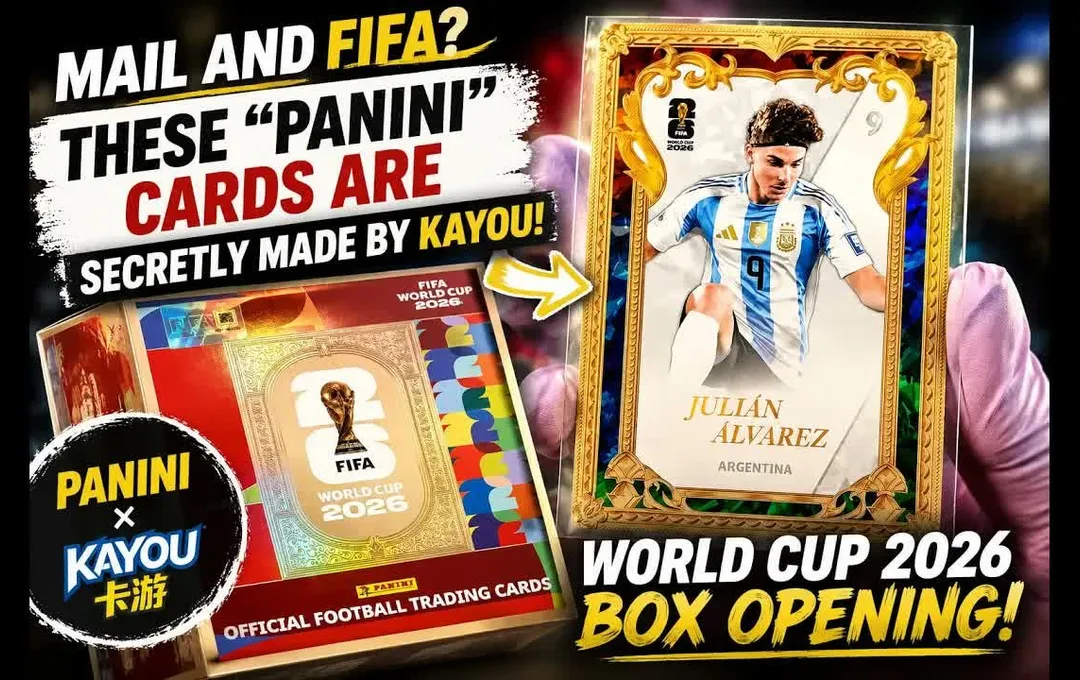
Well, hello there. Today we’re opening something I genuinely never thought I’d see: an official Panini FIFA World Cup 2026 trading card set that is — as far as I can tell — designed by Panini but printed and published by Kayou. Yes, that Kayou. The My Little Pony Kayou. A major Western sports card company partnering with the biggest Chinese card publisher is kind of mind-blowing to me, and I’ve been excited about this box since the moment I heard it existed.
Quick disclaimer up front: I do not follow soccer. At all. Other than the way the World Cup affects traffic around Los Angeles, which I can report is significant. This is not player analysis or an investment guide — it’s a collector looking at the cards themselves, the printing quality, and what this partnership means for the hobby. Which, spoiler, I think is quite a lot.
Watch the full opening here — including me trying out ChatGPT’s advice on how to sound soccer smart:
The Kayou Connection
Here’s the thing that makes this box so interesting: nothing on it says Kayou. Not the box, not the packs, not the cards. It’s all branded Panini, official FIFA licensed product, the works. If you handed this to someone at a card shop they’d have no reason to think it was anything but a Panini product.
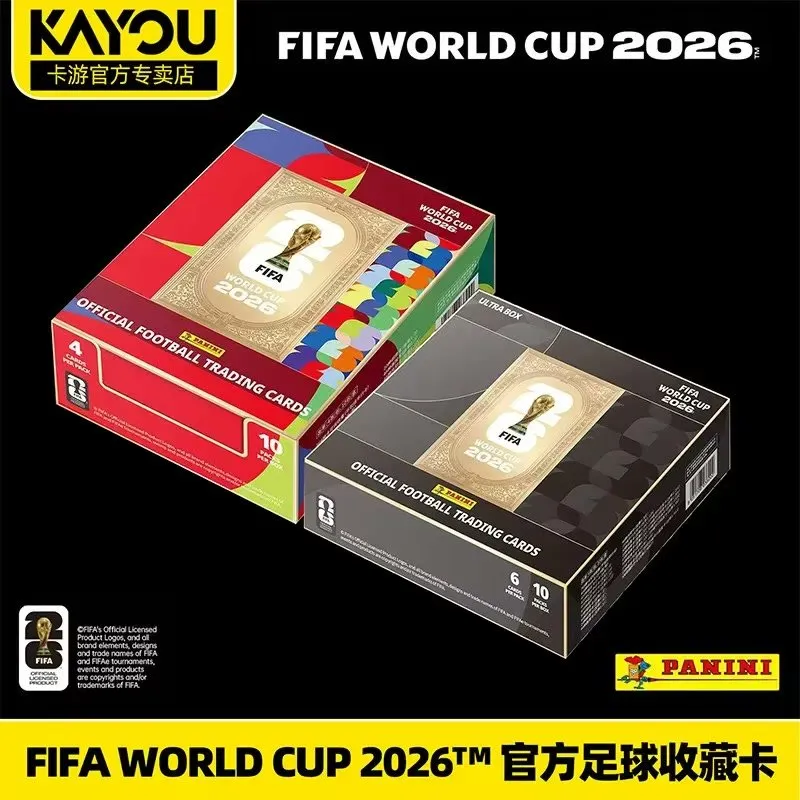
But look at the flier. That’s the Kayou logo right up top — these boxes are sold in Kayou stores in China, under the Kayou label. Panini is the designer here, but Kayou is the printer and the publisher. And honestly, you don’t even need the flier: the moment you touch these cards you know. The coated card stock, the foil treatments, the way the rarities are laid out — these feel exactly like a Transformers or a My Little Pony card. They scream Kayou.
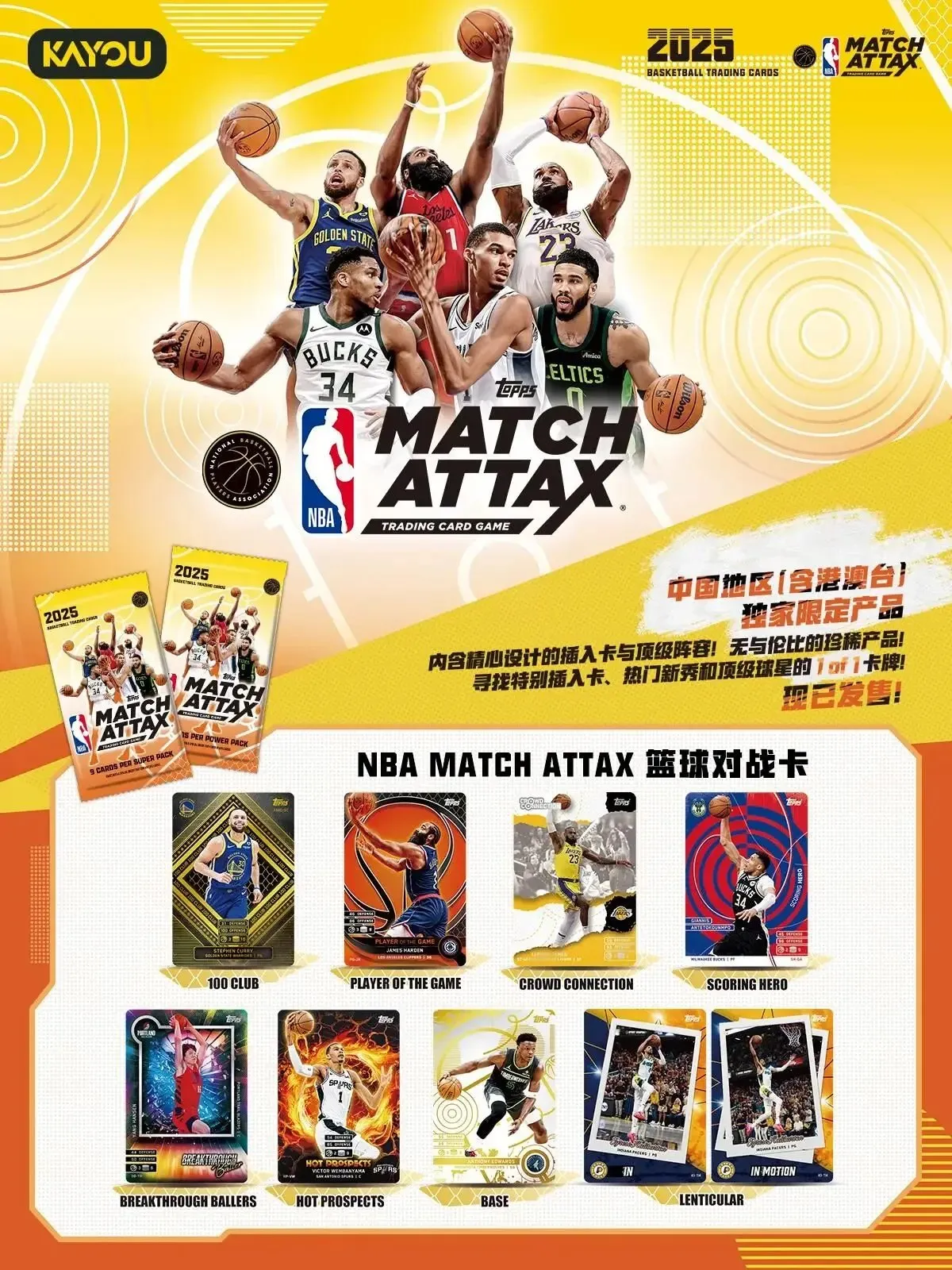
And this isn’t even the first time this has happened. Last year Kayou partnered with Topps to publish the NBA Match Attax set as a China-region exclusive (India got in on this one too). So both of the giant Western sports card companies have now gone to the same Chinese publisher to print their cards. Which sounds surprising until you think about it for five seconds: Kayou knows how to design and publish absolutely gorgeous sets at prices that are, by Western standards, comically low. If you want to expand into China or India — markets where the average collector is not going to be buying many $200+ hobby boxes — Kayou is exactly who you call. I’ve been saying for years that Kayou’s printing is world class, from Saint Seiya to Persona 5 Royal, and apparently Panini and Topps agree with me.
The Set
This is a full-on Western-style card set: 764 total cards, with 408 in the base set, numbered parallels on top, and then a whole pile of insert sets. That’s one of the biggest checklists I’ve seen in a long, long time — even in the sports world you just don’t see 750+ card sets very often. If they really did put every single player on a card, I believe it.
There are two formats. The regular box — the red one I opened — has 10 packs of 4 cards. Then there’s a black Ultra Box with 6 cards per pack and better rarity odds, for a chunk more money. Mine came from the Anime Card Store on AliExpress packed inside one of those foam coolers they’ve started shipping in, which is both hilarious and genuinely the most protective packaging I’ve ever received cards in. And as always I bought two, so one of these boxes is going in the giveaway pile — subscribe if you want a shot at it, it’ll happen before we hit 4,000.
The wild part is the price: this box runs about $25–30. No Western sports set is $25. Boxes of sports cards in America are $200 and way, way up — even Panini’s cheapest line before this, Revolution, ran about $60 a box. And because this is an official World Cup product, you don’t even need to import it: the same box is sitting at Dave and Adam’s, Blowout Cards, Midwest — all the big Western retailers carry it.
The Cards
So what does a Panini design printed on Kayou’s presses actually look like? Like this:
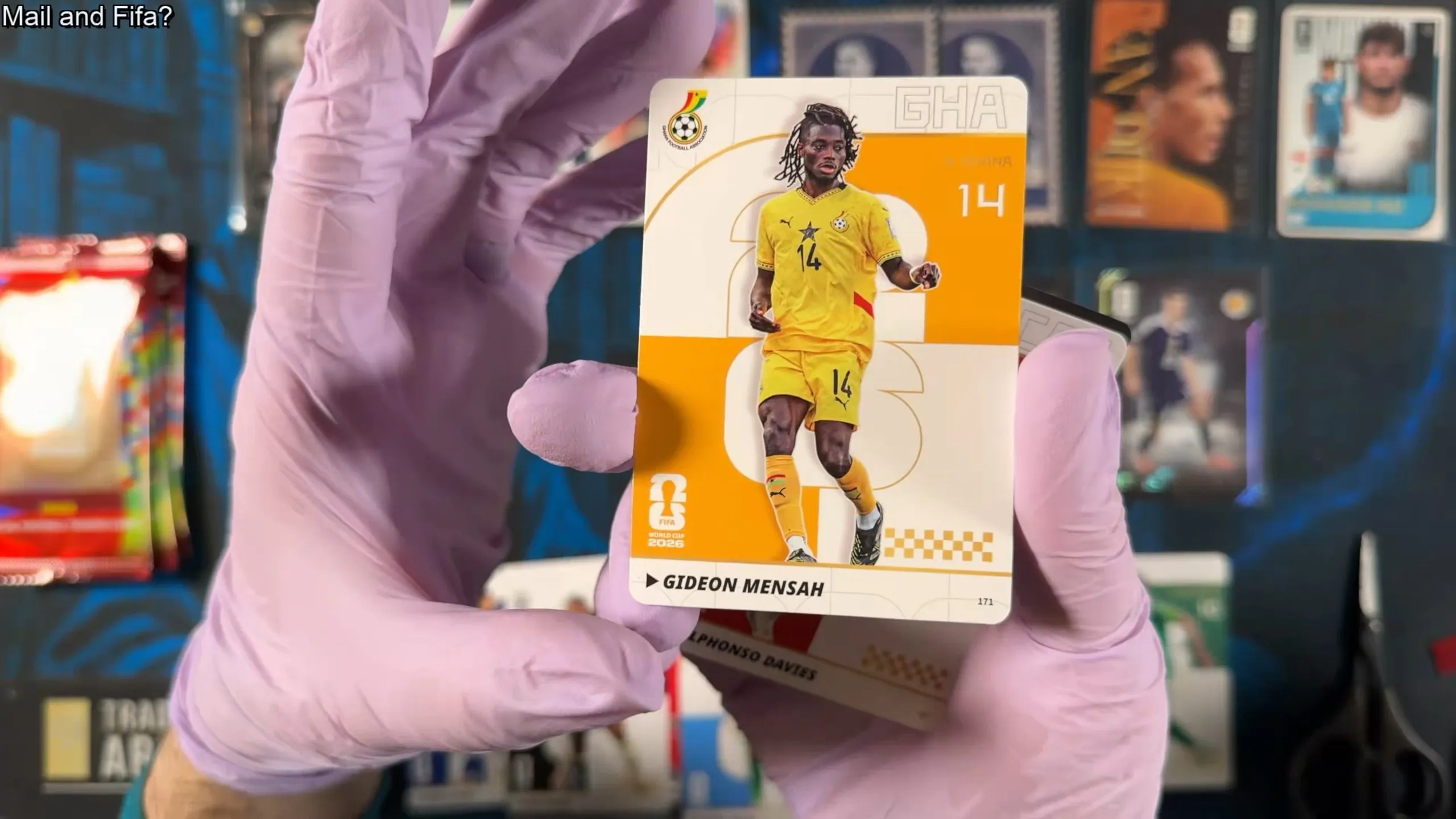
The base cards are clean and honestly nicer than they have any right to be at this price — nice coated stock, not the square paper cards you’d get in a Western sports product. My one complaint about the set lives here: the backs are all identical. No stats, no player info, just the World Cup branding. That’s clearly where they cut costs, and it’s a shame, because a real sports card should have stats on the back. Although given all the trading card lore about players getting furious over their printed stats — it really blew up in the NBA Jam era — maybe Panini just decided to save themselves the angry phone calls.
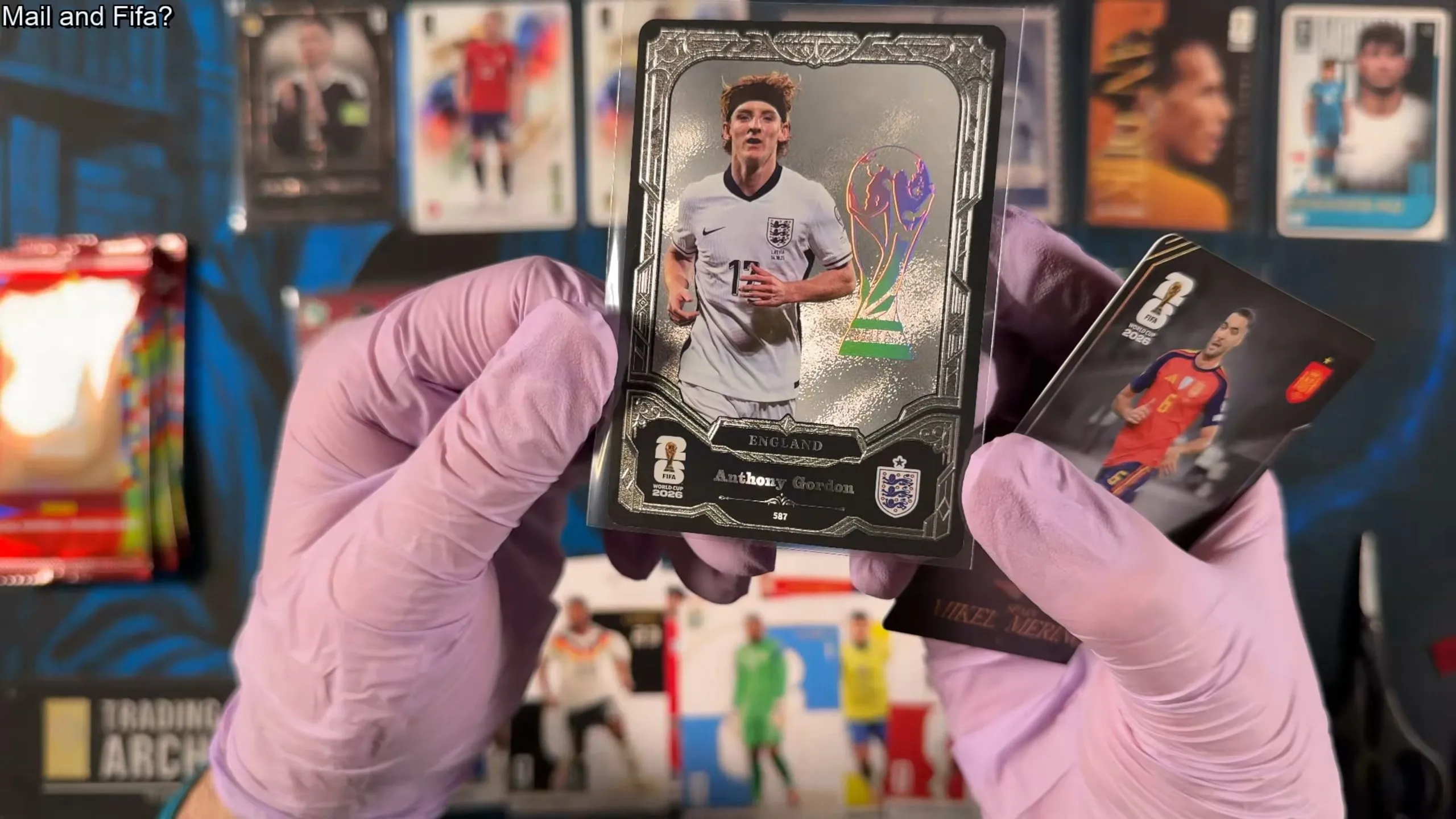
Then you climb the rarity ladder and the Kayou DNA really shows. Look at that England frame card — that metallic border and holographic trophy foil are effects I’ve seen on their anime sets a dozen times, and they look fantastic on a soccer card. I also pulled what felt like an entire starting eleven of Scotland cards, which I assume means Scotland is very good at soccer. Don’t correct me.
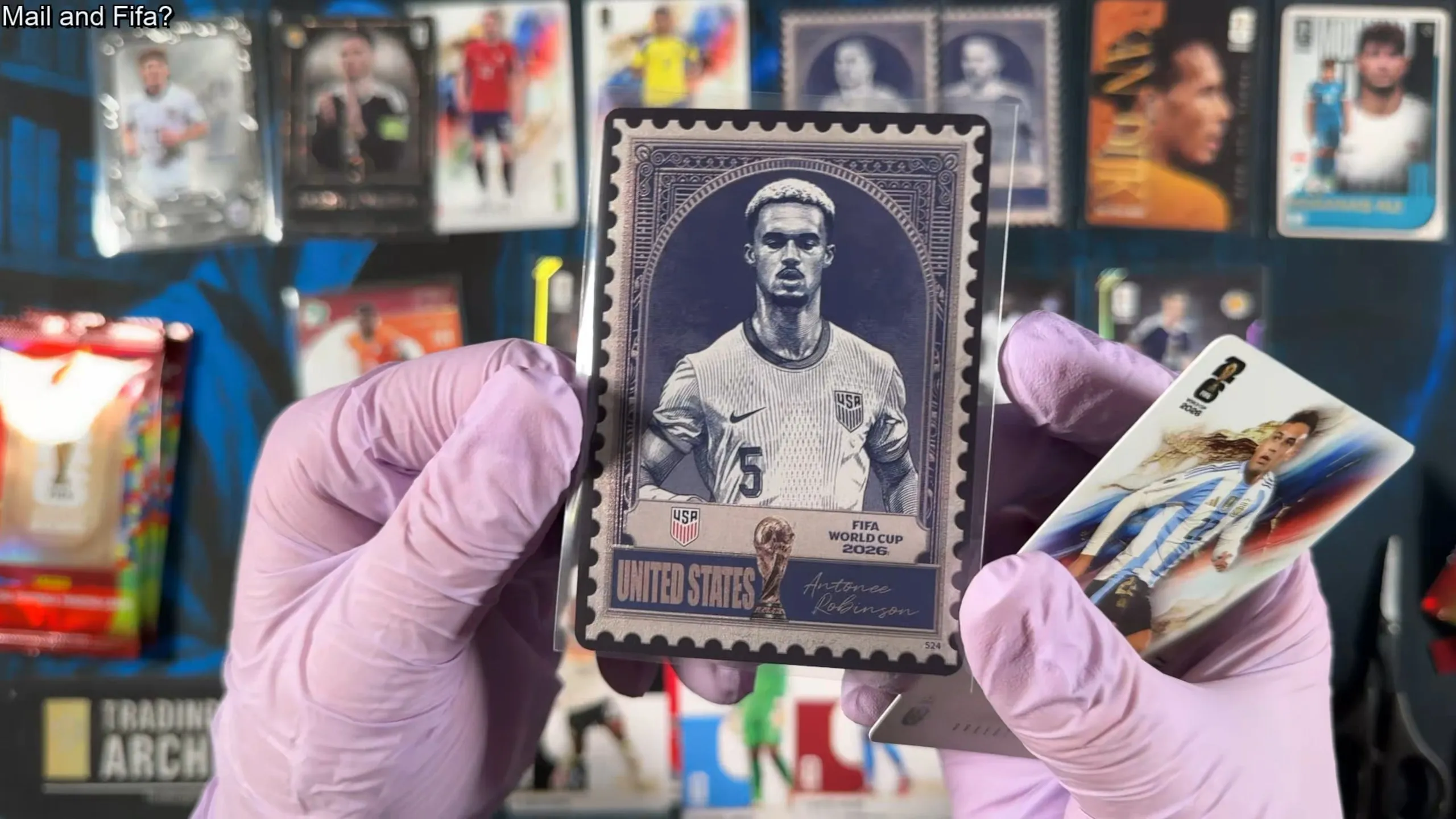
The inserts are where the set gets fun. This United States card is done up as an engraved postage stamp, perforated edges and all — one of my favorite looks in the whole box. There’s a real variety of insert designs like this, plus a parallel system I barely scratched in ten packs.
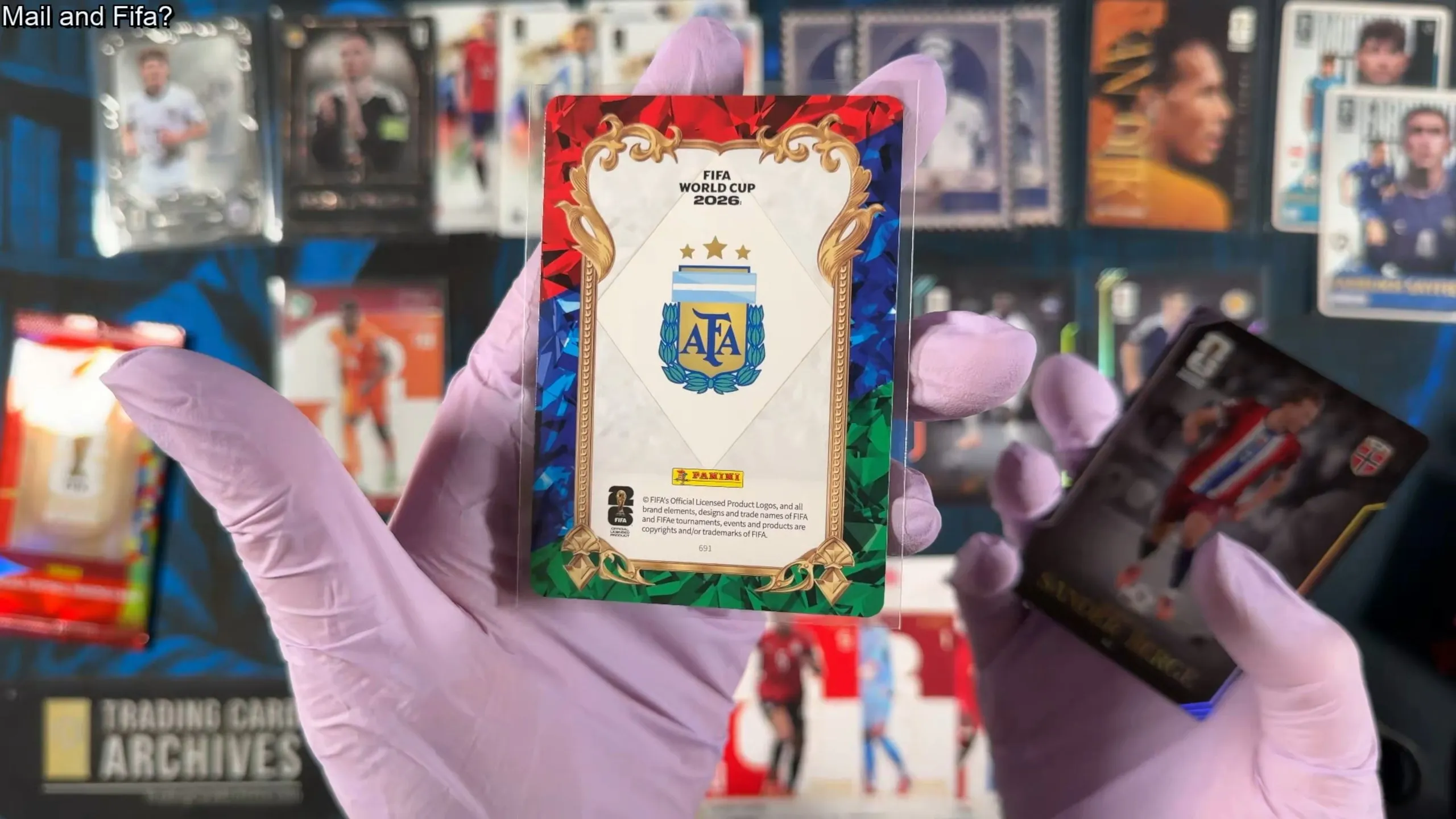
And there’s the receipt: Panini’s logo right on the card back of the hits, on a border that is unmistakably Kayou cracked ice. Two card industries shaking hands on one piece of cardboard.
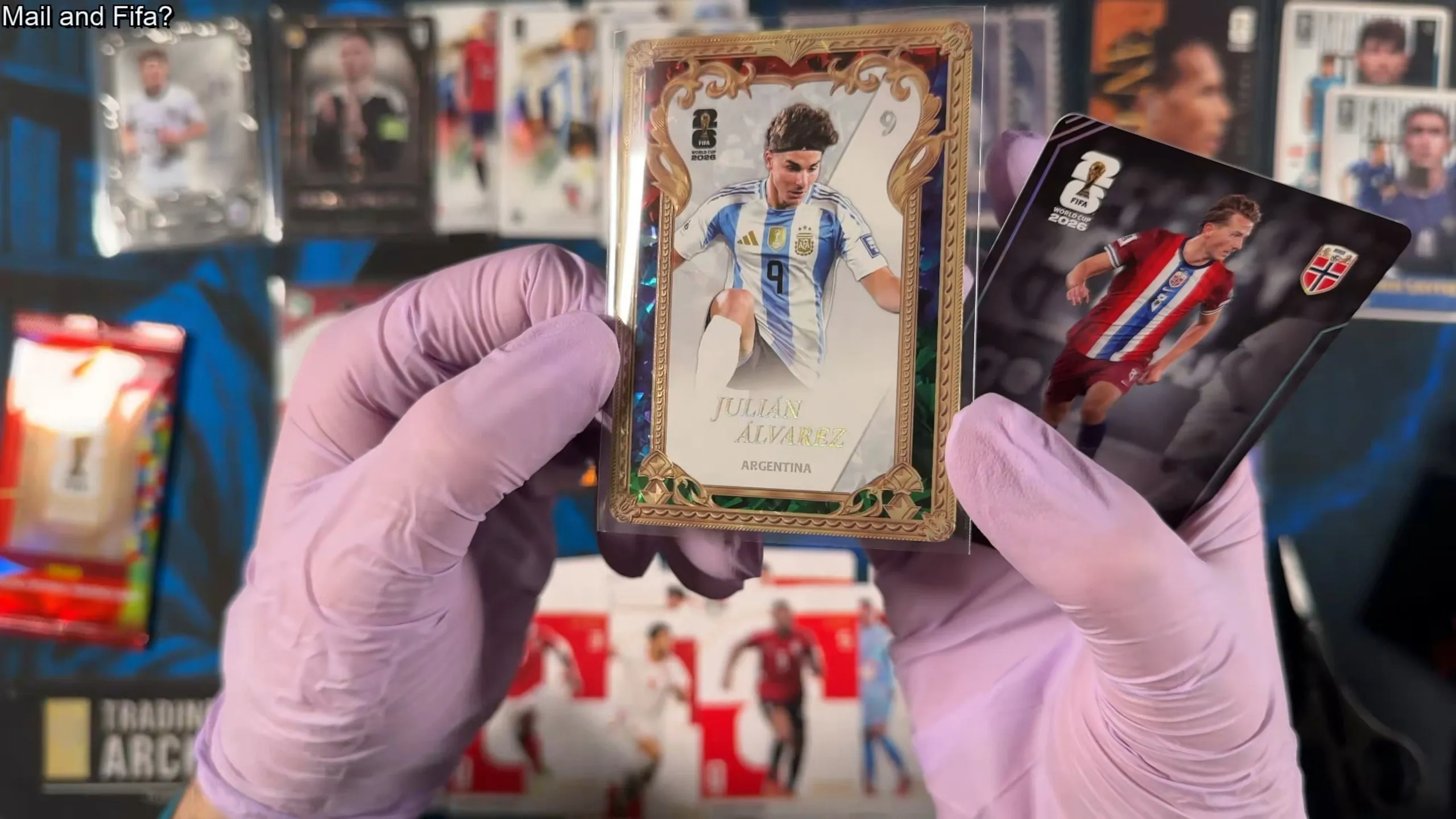
The best card in my box: Julián Álvarez of Argentina, in an ornate gold frame sitting on top of multiple kinds of cracked ice foil. Cracked ice is a very Panini thing to do, but this execution — the layered colors, the texture — is pure Kayou, and the combination is genuinely one of the prettiest sports cards I’ve ever held. I’m told the striker it kept company with in these packs is the Michael Jordan of soccer. I was specifically instructed not to say that. I said it anyway.
Conclusions
I opened this box during the actual World Cup, which for me is unheard of — I’m usually opening sets two years too late, minimum. But at $25 for a Kayou-printed set, I could actually afford to be topical for once.
More importantly, I’m just happy this product exists. A $25 box means kids — in China, in India, anywhere — who could never touch a $200 Topps or Panini hobby box get a genuinely high-quality, fully licensed World Cup set within their price range. This is not a cash grab product; they did a great job on it. And for us collectors it’s a glimpse of something bigger: Panini’s design language running on Kayou’s printing technology at Chinese production costs. Both Panini and Topps have now tested these waters, and if these companies keep working together, we are going to get some absolutely bonkers sets out of it — the kind of over-the-top production Kayou already puts into sets like Three Kingdoms, pointed at licenses the whole world collects.
More of this, please. Grab a box below while they’re still cheap — and have a great week, everybody.